


Historic & Heritage Sites in Cornwall
Cornwall is a place where history feels alive. From the windswept ruins of ancient historic castles to the quiet corners of restored Victorian estates, every road leads somewhere remarkable.
Whether you're drawn to myth and legend, moved by stories of courage and humanity or simply love exploring places where the past lingers in the air, Cornwall rewards the curious with some of Britain's finest historic and heritage sites.
Here are some of the experiences we think every guest should have during their stay.
Our team at The Headland is always happy to share recommendations, suggest routes and help with any bookings. Please speak to our concierge team during your stay; we know Cornwall well and love sharing it.
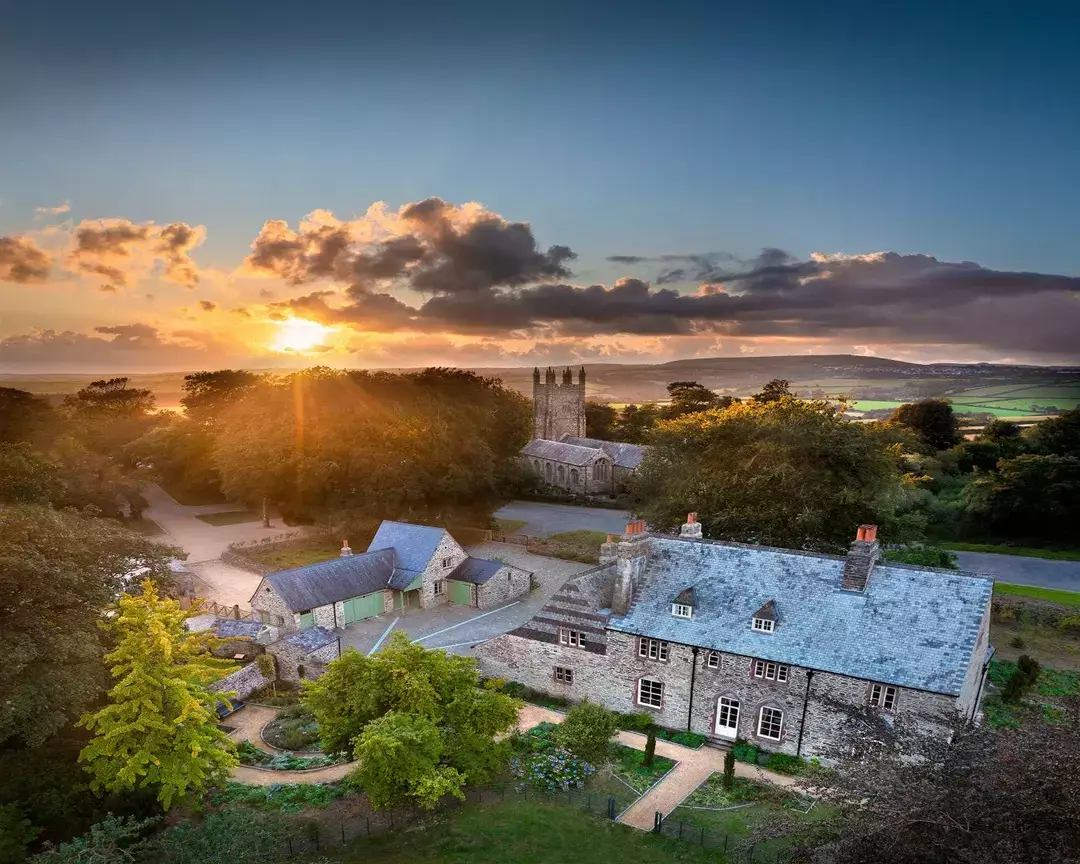
The Story of Emily
Cornwall's Hidden Gem
One of Cornwall's most remarkable new attractions, The Story of Emily in St Ive near Liskeard shines a long-overdue light on Emily Hobhouse, an extraordinary Cornish woman who challenged the social norms of the Victorian era to become a tireless humanitarian and pacifist.
Born in 1860 at the village rectory where she lived until the age of 34, Emily went on to become a fierce advocate for Boer women and children during the Anglo-Boer War, travelling alone to South Africa to document the terrible conditions of concentration camps and lobby the British government for change. Her story is one of remarkable bravery, revered by many and controversial in her own time.
The experience itself is breathtaking in its attention to detail. The original Victorian Rectory has been meticulously restored to 1875, with each room revealing a different chapter of Emily's early life. The adjacent War Rooms use cutting-edge immersive technology, animation, virtual reality and film to bring the broader history of the Anglo-Boer War vividly to life.
After exploring the grounds, guests can dine in a glass-roofed restaurant serving heritage South African dishes inspired by 19th-century cuisine.
Allow at least four hours; this is a full and deeply moving day out.

Tintagel Castle
Cornwall's Most Legendary Historic Site
Few historic sites in Britain stir the imagination quite like Tintagel. Perched dramatically on the cliff edge of the North Cornish coast, these ancient ruins have been bound up with the legend of King Arthur for over eight centuries, said by the 12th-century chronicler Geoffrey of Monmouth to be the very place where the great king was conceived.
The site's history stretches back even further, to the 5th and 6th centuries when it served as a stronghold for the rulers of Cornwall, and evidence of luxury goods traded from as far away as the Mediterranean has been found among its stones.
In the 1230s, Richard, Earl of Cornwall, was so captivated by its mythical associations that he built a castle here purely for the prestige of owning such a legendary place.
Today, visitors can cross the dramatic footbridge to the island, explore the ruined Great Hall, walk in the footsteps of medieval pilgrims and discover Merlin's Cave in the rocks below.
Managed by English Heritage, Tintagel is approximately an hour from The Headland and is an unforgettable day out for all ages.
For your exclusive discount, use CORNWALL20 when booking your tickets.
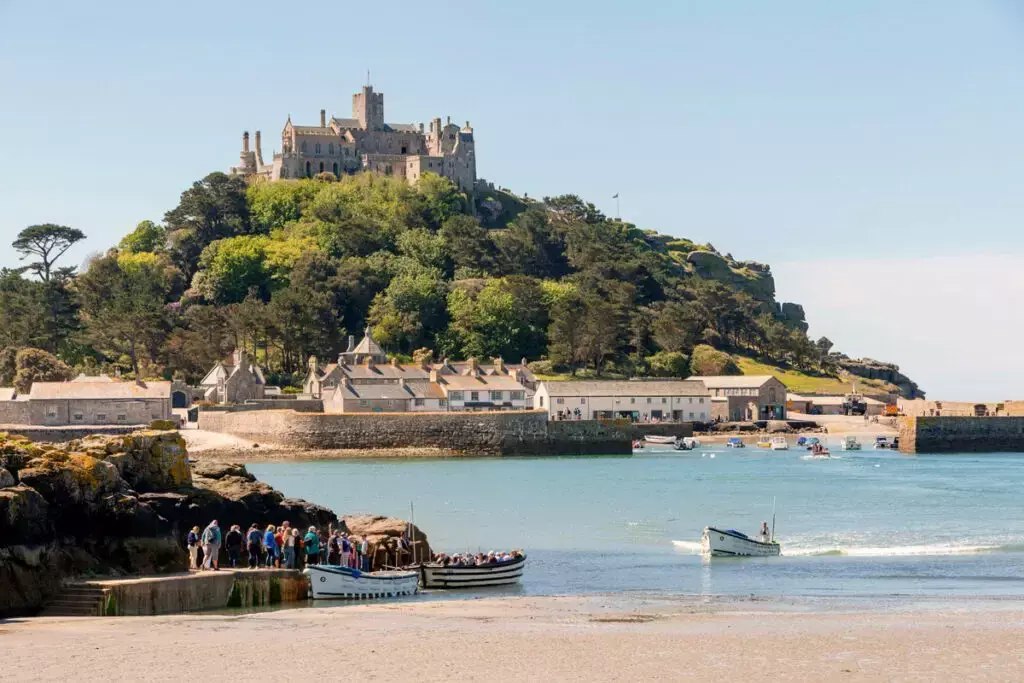
St Michael's Mount
A Cornwall Heritage Icon
Rising from the waters of Mount's Bay near Penzance, St Michael's Mount is one of the most recognisable heritage landmarks in all of England. This tidal island, crowned by a medieval castle and chapel, has served as a Benedictine priory, a fortified garrison, a place of pilgrimage and a family home, all over the course of a thousand years.
At low tide, visitors can walk across the ancient cobbled causeway in the footsteps of centuries of pilgrims, traders and villagers. At high tide, a short boat ride adds to the sense of occasion. The castle itself is a treasure house of architectural styles: Gothic, Tudor and Victorian, filled with Chippendale furniture, Gainsborough portraits, antique weaponry and the famous Chevy Chase Room, whose 17th-century hunting frieze lines the walls of what was once the priory's refectory.
Below the castle, subtropical gardens cling to the island's rocky slopes, and the harbour village is home to a small resident community, a café and a charming island shop. Still cared for by the St Aubyn family alongside the National Trust, St Michael's Mount is both a living home and a working piece of history.
It is around an hour from The Headland and well worth making a day of it.
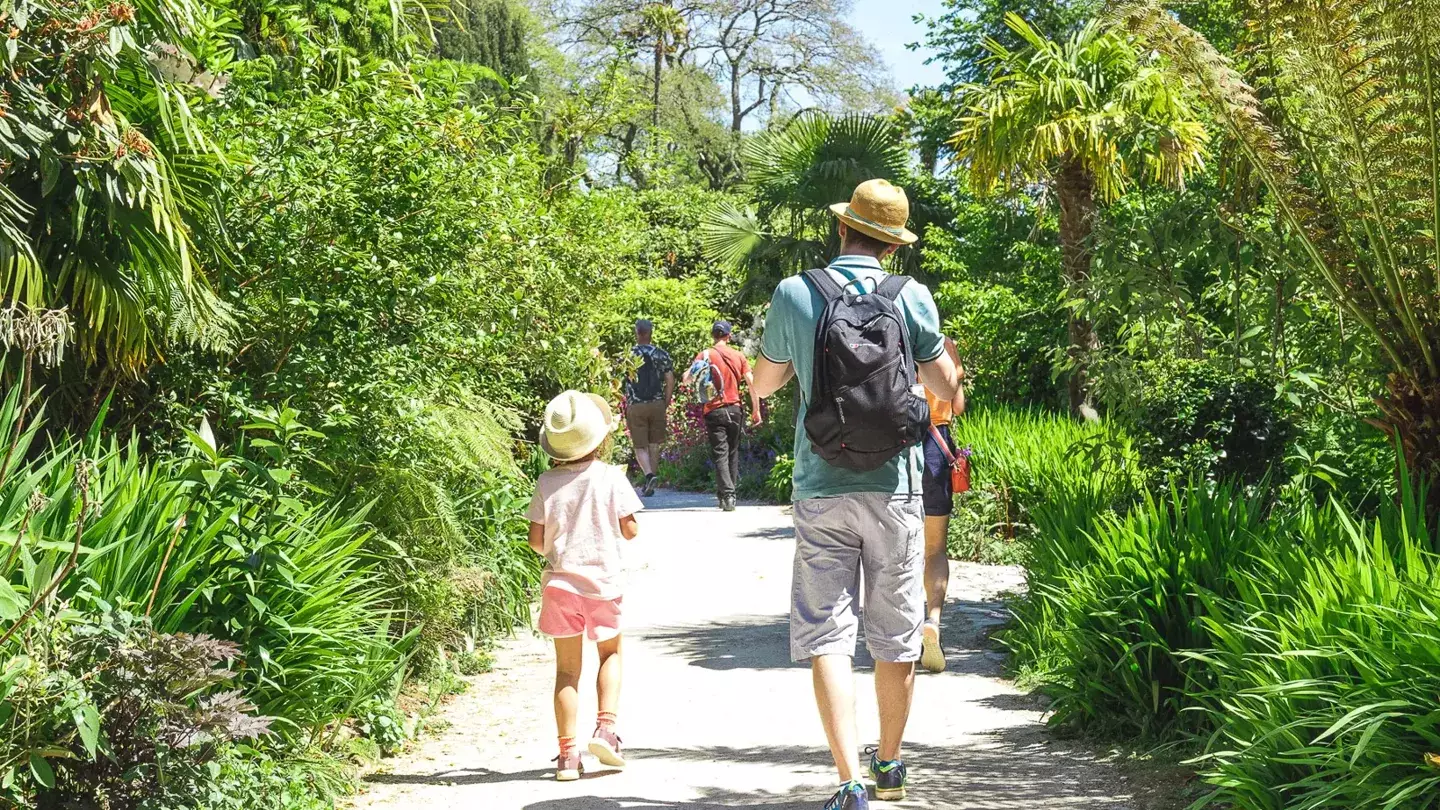
The Lost Gardens of Heligan
A Sleeping Beauty Restored
There are few stories in British horticultural history as poignant as that of Heligan. At the end of the 19th century, this magnificent thousand-acre estate near Mevagissey was tended by a team of 22 gardeners. Then the First World War came, and the men left for the front. Only six of them returned. The working kitchen gardens, and the Italian garden, the vast jungle valleys were gradually swallowed by brambles and ivy and slept for nearly 70 years.
In 1990, a discovery by Tim Smit, John Nelson and Tremayne descendant John Willis set in motion what became the largest garden restoration project in Europe. What they uncovered was extraordinary: a lost world of Victorian productive gardens, winding pleasure grounds, exotic jungle planting and a landscape rich with wildlife.
Today, Heligan's 200 acres are open to all, and the restoration continues. Visitors can wander through kitchen gardens supplying the on-site restaurant, explore the atmospheric jungle valley where tree ferns and giant rhubarb flourish, seek out the famous sleeping earth sculptures and discover a landscape that carries the spirit of those who tended it so carefully over generations.
Heligan is approximately 45 minutes from The Headland, near St Austell, on the south coast.

The Eden Project
A Story of Regeneration
Just a short distance from Heligan, near St Austell, lies one of Cornwall's great modern stories, the Eden Project. Where once there was a 160-year-old exhausted china clay pit, Tim Smit (the same visionary behind Heligan's restoration) created something extraordinary: the world's largest greenhouse, a living demonstration of mankind's relationship with the plant kingdom.
Opened in March 2001 after two years of ambitious construction, the Eden Project is built around two iconic biome domes filled with hexagonal cells, their shape inspired by soap bubbles, their scale impossible to fully prepare for.
The Rainforest biome, eleven double-decker buses high, houses the largest captive rainforest in the world, with palms, bananas and tropical species thriving in conditions kept between 18 and 35 degrees Celsius. The Mediterranean biome re-creates the warmth of the south with olives, grapevines, cotton and citrus.
Beyond the biomes, extensive outdoor gardens take visitors on a journey through climate, ecology and global plant culture. It is a place that is simultaneously awe-inspiring and thought-provoking, best explored at a leisurely pace and extraordinary at any time of year.
From The Headland, the Eden Project is approximately 40 minutes by car.

The Minack Theatre
Cornwall's Stage Like No Other
Quite simply one of the most extraordinary performance venues in the world. Carved by hand into the granite cliff edge at Porthcurno in West Cornwall, the Minack is the remarkable creation of one woman, Rowena Cade, who, in 1932 offered her clifftop garden as a stage for a local production of Shakespeare's The Tempest, then spent the next five decades building, expanding and decorating the theatre herself, often working alongside her gardener using little more than hand tools.
The story of how the Minack came to be is as captivating as any play performed on its stage. Rowena moved to Cornwall after the First World War, buying the rocky headland for just £100.
What began as a rough-and-ready arrangement of granite seating and a makeshift stage grew, season by season, into one of Britain's most beloved cultural landmarks. She worked on it well into her eighties, carving the names of productions into the concrete seats before it set, details that visitors can still trace with their fingers today.
The theatre hosts a full programme of productions from Easter through to October: Shakespeare, musicals, comedy and drama, performed against an open backdrop of sea and sky that no indoor venue could ever replicate.
Even outside of the performance season, the site is open to visitors year-round, with a café, a fascinating exhibition about Rowena's life and work and a succulent garden tumbling down the clifftops.
The Minack is approximately one hour and forty minutes from The Headland, but the drive through the far west of Cornwall is one of the finest in the county and very much a part of the experience.
Also Worth Exploring
Charlestown Historic Harbour, St Austell One of the best-preserved historic Georgian ports in Britain, Charlestown feels genuinely unchanged since the 18th century.
A working harbour built for the china clay trade, it has appeared in dozens of period films and television productions, including Poldark, and remains home to tall ships that can often be seen at anchor.
A short walk from the harbourside reveals the excellent Shipwreck, Rescue and Heritage Centre.
Pendennis Castle, Falmouth Built by Henry VIII as part of his coastal defence programme, Pendennis Castle commands spectacular views across the Fal Estuary and out to sea.
The castle played a significant role in the Civil War and its grounds tell the story of five centuries of coastal fortification.
An English Heritage site, it is well-suited to families and history enthusiasts alike.
Truro Cathedral Cornwall's only city, is home to a cathedral that, while Victorian in construction, sits at the heart of a county with deep Celtic Christian roots.
Completed in 1910 and built partly over the remains of a 16th-century parish church, Truro Cathedral is a graceful piece of Gothic Revival architecture and a peaceful place to pause during a day exploring the city's independent shops and galleries.
Bodmin Moor & Jamaica Inn The wild granite uplands of Bodmin Moor carry centuries of history — Bronze Age stone circles, mysterious ancient monuments and the brooding atmosphere that inspired Daphne du Maurier's Jamaica Inn.
The inn itself still stands on the A30 and welcomes visitors exploring the moor. Du Maurier lived much of her life in Cornwall, and her literary connection to the landscape remains one of the county's most beloved threads.
Bodmin Jail Attraction Step into Cornwall's dark and fascinating past at Bodmin Jail, one of the county's most unique visitor attractions. Originally built in 1779, this historic former prison has been transformed into an immersive experience that combines authentic heritage with cutting-edge technology to bring its stories to life. Explore the jail, uncover tales of crime and punishment, and experience the award-winning Dark Walk attraction. Whether you're visiting as a couple, family, or group, Bodmin Jail offers a memorable day out in the heart of Cornwall. Bodmin Jail is approximately 30 minutes from The Headland and is an extraordinary all-weather day out. Guests of The Headland Hotel can enjoy an exclusive 10% discount on standard admission with a special promotional code. Please get in touch with our reception team for the exclusive code.